Showing posts with label Hummus. Show all posts

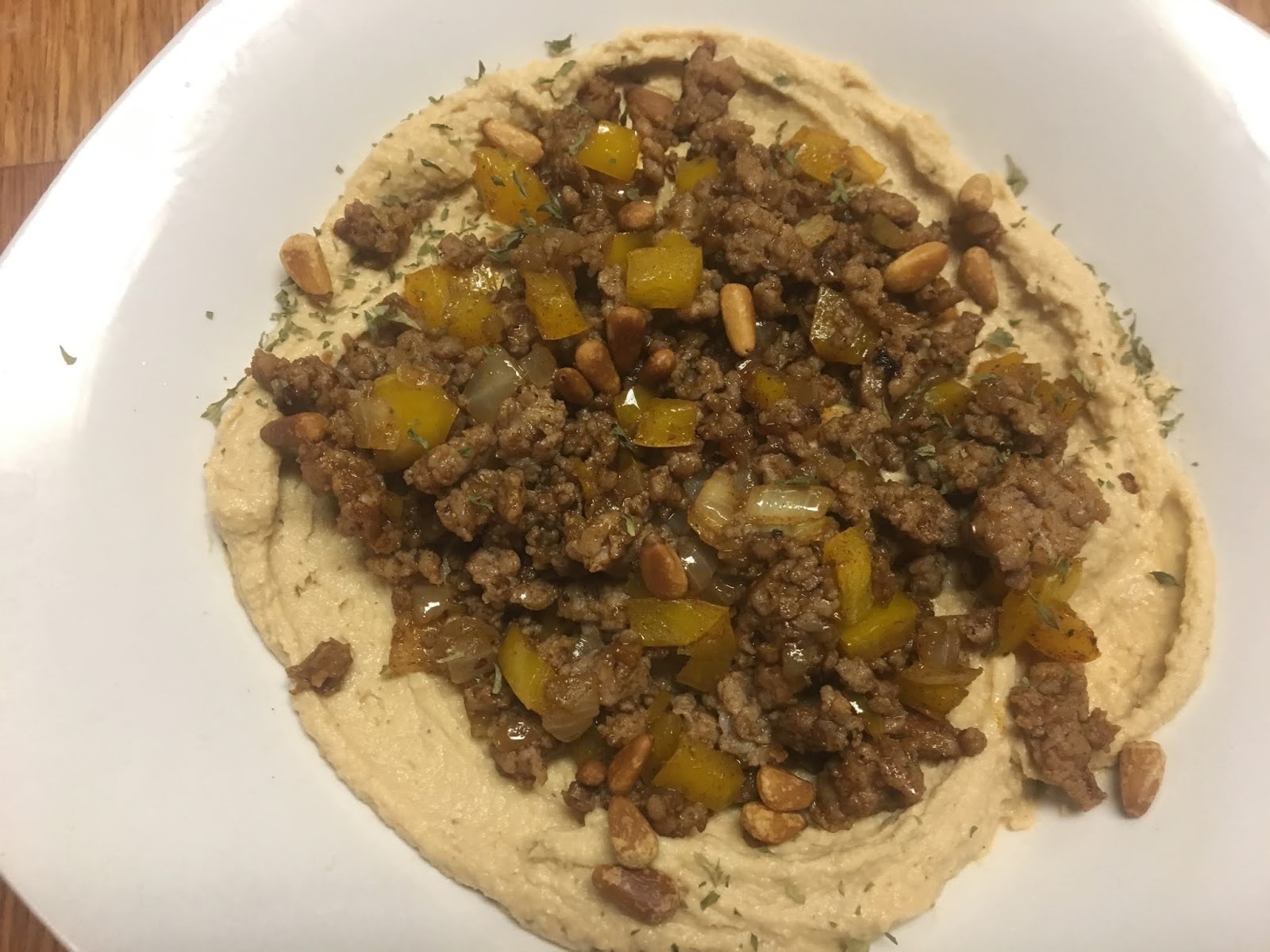
Hummus with Meat All Over It

We are hummus fans so when I saw Molly Yeh making Hummus with Meat All Over It last weekend on Food Network, I knew this was a recipe I had to try. However, she used ground beef while I used sausage. I omitted her pomegranate seed garnish and instead sautéed some yellow peppers along with the onions—they added both color and flavor.
Lately I've tried several new recipes that I've deemed okay but they didn't really meet my expectations (and consequently was added to this blog). However, THIS RECIPE, with it's flavorful combination of spices, EXCEEDED MY EXPECTATION as did Molly's recipe for Whole Wheat Pitas that I served with this dish. 

Hummus with Meat All Over It       6 to 8 servings
1 lb. ground pork sausage + 2 tablespoon oil but only if needed
1 large onion, finely chopped
1 yellow, red or orange pepper, finely chopped
Kosher salt
2 1/2 teaspoons ground cumin
2 teaspoons ground cinnamon
1 teaspoon paprika
1/4 teaspoon allspice
1/4 teaspoon coarsely ground black pepper
2 cups hummus -- I used our recipe for Smooth & Creamy Hummus
1/4 cup toasted pine nuts
Chopped fresh parsley, for garnish

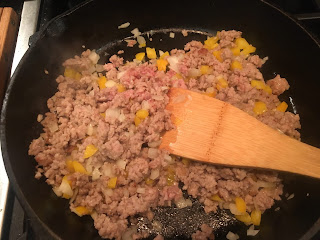
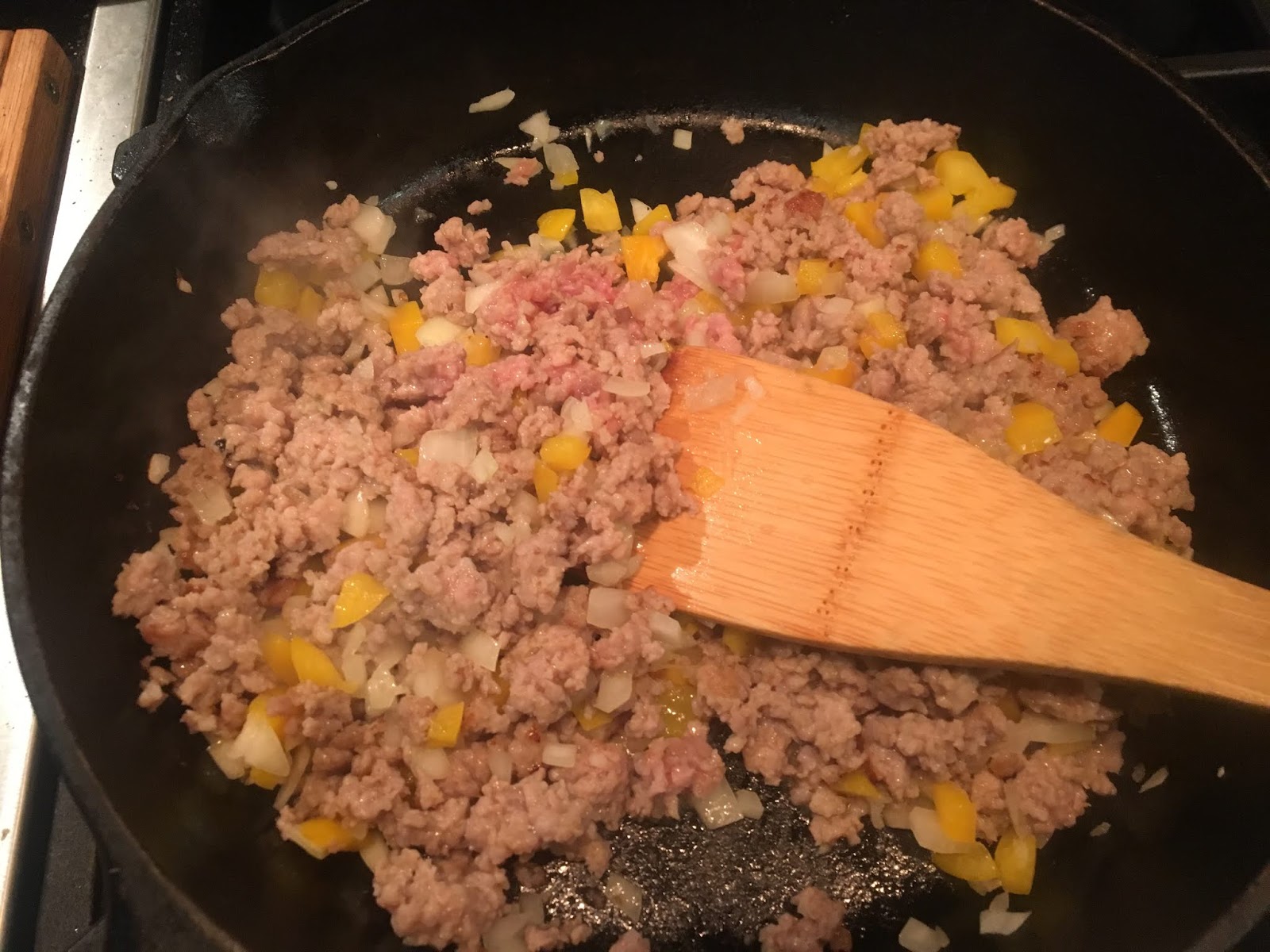
  1. Heat a large cast iron skillet on medium-high heat. Add the sausage and break it up into small pieces as it begins to cook. Add the onions and peppers, and cook until sausage is cooked through and onions and peppers are tender; after several minutes of cooking, add  the seasonings (salt, cumin, cinnamon, paprika, allspice and black pepper). Taste and add additional seasonings as desired.
  2. Swirl the hummus into a large serving bowl, creating a slight ridge at the top of the bowl . . . or divide hummus among individual bowls.

  3. Top hummus with sausage mixture; sprinkle with pine nuts and parsley. 
  4. Serve with Whole Wheat Pitas, using piece of the pita to scoop up bites of both hummus and sausage mixture. 
Recipe without photos . . .
Hummus with Meat All Over It       6 to 8 servings
1 lb. ground pork sausage + 2 tablespoon oil but only if needed
1 large onion, finely chopped
1 yellow, red or orange pepper, finely chopped
Kosher salt
2 1/2 teaspoons ground cumin
2 teaspoons ground cinnamon
1 teaspoon paprika
1/4 teaspoon allspice
1/4 teaspoon coarsely ground black pepper
2 cups hummus -- I used our recipe for Smooth & Creamy Hummus
1/4 cup toasted pine nuts
Chopped fresh parsley, for garnish

  1. Heat a large cast iron skillet on medium-high heat. Add the sausage and break it up into small pieces as it begins to cook. Add the onions and peppers, and cook until sausage is cooked through and onions and peppers are tender; after several minutes of cooking, add  the seasonings (salt, cumin, cinnamon, paprika, allspice and black pepper). Taste and add additional seasonings as desired.
  2. Swirl the hummus into a large serving bowl, creating a slight ridge at the top of the bowl . . . or divide hummus among individual bowls.
  3. Top hummus with sausage mixture; sprinkle with pine nuts and parsley.
  4. Serve with Whole Wheat Pitas, using piece of the pita to scoop up bites of both hummus and sausage mixture. . 
Make ours “thin & crispy” – Pizza Crust & a couple of our favorite toppings . . .


Q. When and where was Pizza Hut® started?
A. Pizza Hut was founded in 1958 by brothers Dan and Frank Carney in their hometown of Wichita, Kansas.


     Barry and I can remember eating Pizza Hut pizza in the late 1960s in Hutchinson, Kansas. Ever since then we’ve been “thin and crispy” fans. Of course, that was the only option back then.
     Now, we general opt for pizza at home. I’ve experimented with several dough recipes. Then, several years ago a friend gave me the book Baking with Julia (written by Dorie Greensapan). Based on the PBS Master Chefs series hosted by Julia Child, the cookbook is full of wonderful recipes, explanations, tips and photographs. I’ve tried lots of the recipes including Chef Craig Kominiak’s Focaccia. The great thing about this recipe, it that the dough is mixed, refrigerated and then baked later. I had a batch of it in the refrigerator about the time I wanted to make pizza so it seemed logical to try it is place of the usual pizza dough.
     To achieve a “thin and crispy” crust I used just one-fourth of the focaccia dough, rolled it as thin as possible. It worked quite nicely and I can make just one pizza and then use the rest of the dough for either sweet or savory meal accompaniments or,  it can be split and used to make sandwiches.
     Craig Kominiak's focaccia recipe follows; I have interjecting my notes and photos about converting it to pizza dough and also added descriptions of some of our favorite pizza toppings.

Craig Kominiak’s Focaccia     Makes 3 focaccias (or 4 pizza crusts)
2 1/4 to 2 1/2 cups lukewarm water (about 90°F) – divided use
2 tablespoons active dry yeast
1/4 cup olive oil
6 1/2 cups unbleached all-purpose flour
4 teaspoons salt

Focaccia Toppings
Herb-infused or other olive oil
Chopped fresh herbs, such as rosemary and/or thyme (2 to 3 tablespoons)
Coarse sea salt

MAKING THE DOUGH
1.  Whisk ½ cup water and the yeast together in the bowl of a mixer. Set aside for 5 minutes until yeast dissolves and turns creamy. 
Yeast will bubble as it sets.
2.  Pour 1¾ cups warm water into a large measuring cup, add olive oil, and whisk to blend; set aside.
3.  Whisk flour and salt together in a large bowl and set aside.
4.  Pour water-oil mixture over the yeast and whisk to blend. Add about half the flour, and stir with a rubber spatula to mix.
5.  Attach dough hook, add remaining flour, and mix on low for 3 minutes or until dough starts to come together. If the dough appears dry and a little stiff, add a few drops of warm water, scraping the bowl and hook if necessary to incorporate the water and create a soft dough. Increase mixer to medium-high and continue to mix for 10 minutes, scraping down hook and sides of bowl as needed, until  you have a soft, slightly moist, extremely elastic dough that cleans the sides of bowl. You will know the dough is properly mixed when a piece can be stretched without tearing to create a “window” in an almost transparent patch of dough.
When dough is properly mixed, it can be stretched without tearing.
6.  FIRST RISE —Transfer dough to a work surface and form into a ball. Place in an oiled bowl, turn it to cover with oil, then cover the bowl tightly with plastic wrap. Allow dough to rise until doubled in bulk, 1 to 1½  hours.
7.  SECOND RISE — Fold dough down on itself to deflate and let rise again until doubled and billowy, 45 minutes to 1 hour.
8.  SHAPING & REFRIGERATING — Fold dough over on itself again to deflate and turn it out onto a work surface. Using a metal dough scraper or a knife, cut dough into 3 equal pieces (I cut it into 4 pieces for pizza). Shape each piece into a ball, and place each ball in an oiled gallon-size lock-top plastic bag and refrigerate for at least 24 hours—the time needed to set the bubbly structure in place. (Since pizza dough does not need that bubbly structure, I have made the dough, refrigerated it a couple of hours and proceeded with the next step.)
9.  1½ HOURS BEFORE BAKING — About 1½ hours before you plan to bake, remove the dough from the refrigerator and take out of oiled bags. Place on a lightly floured surface, dust tops of balls with flour, and cover loosely but completely with plastic. Let rest 1 hour.
10. BAKING — Position oven rack in lower third of oven and preheat to 450°F. Line two baking sheets with parchment and dust with cornmeal; set baking sheets aside. Fill a spray bottle with water and set aside. (425° - 450’ for pizza.)
a.  Focaccia — Press down gently on each piece of dough, causing bubbles to appear on the sides, then slit the bubbles with a single-edge razor to release the gases. Gently pull and stretch each piece of dough into a 10” square. Let the dough relax, covered, for 10 minutes. Transfer foccacias to the baking sheets. Use a single-edge razor to slash each square, cutting a tic-tac-toe pattern. Brush foccacias with olive oil, sprinkle with fresh herbs and coarse sea salt, and put them into heated oven. Bake 15 to 20 minutes, or until they are golden with a heavy speckling of small surface bubbles, spraying the oven with water three times during the first 8 minutes of baking. As soon as you remove the focaccias from the oven, brush them with a little additional olive oil and transfer them to a rack to cool before serving.


b.  Pizza — (Using ¼ of the refrigerated dough mixture) Using a rolling pin, roll dough into a thin circle (or thick if you prefer).
Tranfer to pizza pan and stretch dough to fit; trim off extra dough on the edges, if needed. Add your favorite topping at this point (do NOT let it rise again at this point) and bake in a preheated 425° to 450° oven for 12 to 15 minutes or until crust is nicely browned and crisp.
A pizza pan with holes allows for good heat circulation and results in a crisp crust.
Mold dough to pan and trim off any excess crust.

A couple of our favorite toppings:
·   Sausage-Veggie Pizza: Mild sausage, mushroom & black olives. Before adding these toppings we sometimes spread the crust with a thin layer of tomato sauce to which we add Italian seasoning. Other times we spread the crust with a thin layer of basil &/or dried tomato pesto. Cheese toppings: Mozzarella &/or Parmesan; Cheddar works well, too. Drizzle with olive oil before baking.
·   Chicken-Spinach Pizza: Cook ground chicken with onions in a little olive oil; add a handful or two of spinach leaves and cook to wilt. Spread crust with a thin layer of hummus; distribute cooked chicken mixture and arrange strips of roasted red peppers over pizza; top with grated Parmesan cheese. Drizzle with additional olive oil before baking. (This is the pizza pictured at the top of this post.)

Related Posts:
Pepperoni Pizzaz Pizza
Pesto & Pizza