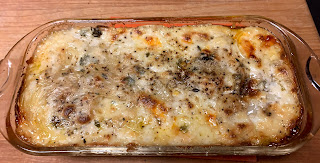
Scalloped Potatoes —cheesy or plain

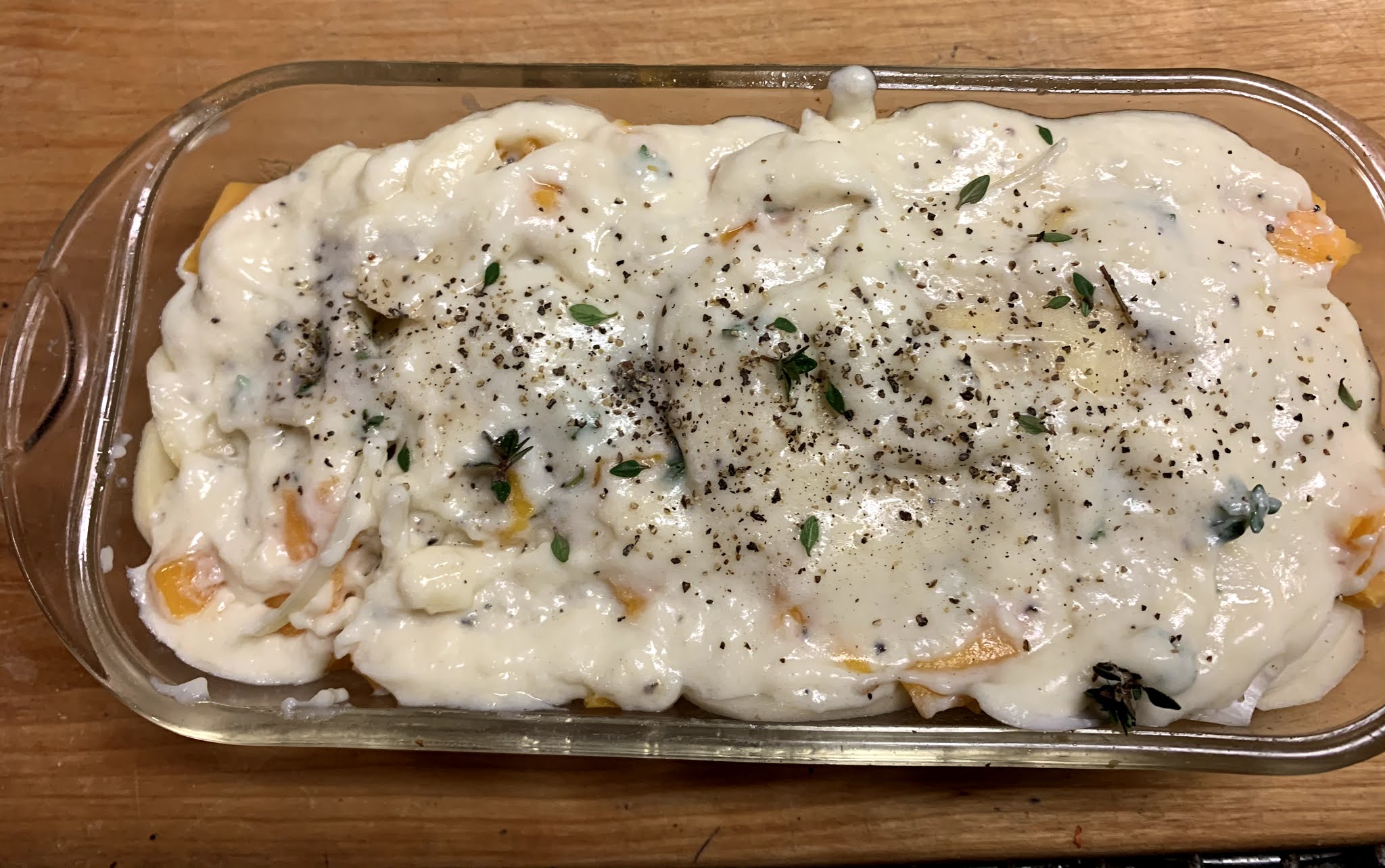
Winter, especially this 2021 winter when we rarely leave the house, means COMFORT FOOD. Mom’s scalloped potatoes were always a welcome addition to a ham dinner . . . but her recipe relies on Campbell’s soup as the binder.  I prefer to use a basic white for any number of reasons. 

I added cheese to our scalloped potatoes so technically they can be referred to as either Cheesy Scalloped Potatoes or Potatoes au Gratin.

This recipe can easily be doubled and baked in a 9"x13" baking dish.


Cheesy Scalloped Potatoes with Ham & Slaw w/ Mom's Celery Seed Dressing.


Scalloped Potatoes —cheesy or plain   4 servings 

1 batch white sauce (using 2 tablespoons butter, 2 tablespoons flour, 1 cup milk, 1/2 tsp. salt) 

1 1/2 pounds white potatoes, peeled & sliced about 1/8" thick

Approximately1/4 of a large onion, thinly sliced

Kosher salt and coarse pepper to taste

Fresh thyme leaves 

1/2+ cup grated Cheddar cheese

  1. Preheat oven to 350˚F.
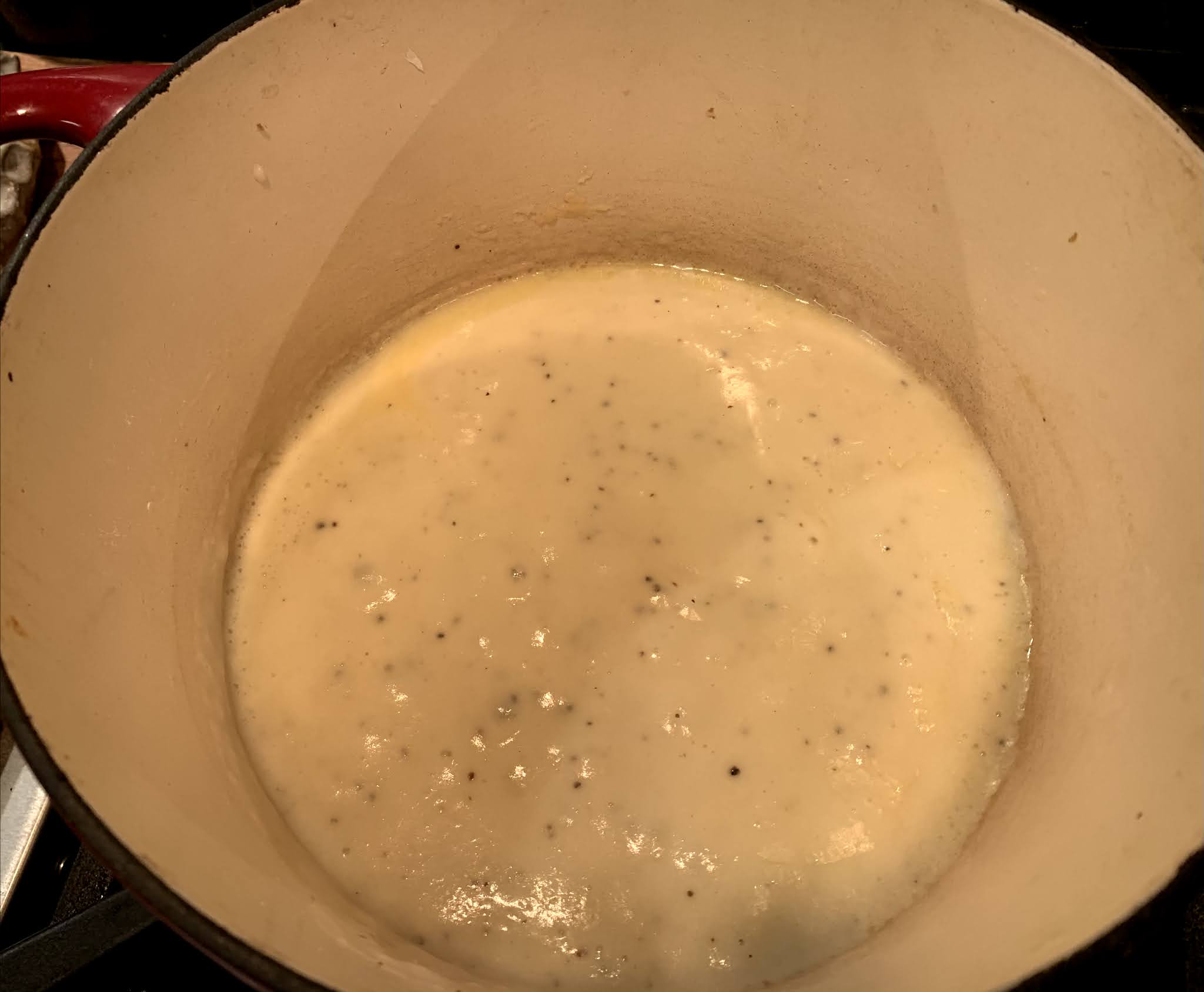
  2. Prepare the white sauce following directions on this link—Basic White Sauce.
  3. Grease a smaller sized baking dish (I used a 5”x9” Pyrex dish)
  4. Place 1/3 of the potatoes in the bottom of dish; top with 1/3 of the sliced onions; season with salt and pepper to taste; sprinkle lightly with fresh or dried thyme leaves.
  5. Add 1/3 of the cheese if using and then spoon 1/3 of the cream sauce over top. 

  6. Repeat layers ending with cream sauce. 
  7. Cover and bake for 35 minutes. Uncover and bake for an additional 20 to 30+ minutes or until golden brown and potatoes are tender. Broil for 3 to 4 minutes to obtain a golden top.
  8. Let potatoes rest at room temperature a few minutes before cutting — they will remain piping hot for some time but the resting time allows the liquids to tighten up. 
Recipe without photos . . . Scalloped Potatoes —cheesy or plain   4 servings 

1 batch white sauce (using 2 tablespoons butter, 2 tablespoons flour, 1 cup milk, 1/2 tsp. salt) 

1 1/2 pounds white potatoes, peeled & sliced about 1/8" thick

Approximately1/4 of a large onion, thinly sliced

Kosher salt and coarse pepper to taste

Fresh thyme leaves 

1/2+ cup grated Cheddar cheese

  1. Preheat oven to 350˚F.
  2. Prepare the white sauce following directions on this link—Basic White Sauce.
  3. Grease a smaller sized baking dish (I used a 5”x9” Pyrex dish)
  4. Place 1/3 of the potatoes in the bottom of dish; top with 1/3 of the sliced onions; season with salt and pepper to taste; sprinkle lightly with fresh or dried thyme leaves.
  5. Add 1/3 of the cheese if using and then spoon 1/3 of the cream sauce over top. 
  6. Repeat layers ending with cream sauce. 
  7. Cover and bake for 35 minutes. Uncover and bake for an additional 20 to 30+ minutes or until golden brown and potatoes are tender. Broil for 3 to 4 minutes to obtain a golden top.
  8. Let potatoes rest at room temperature a few minutes before cutting — they will remain piping hot for some time but the resting time allows the liquids to tighten up. 
Dona’s Old Fashioned Bread Pudding

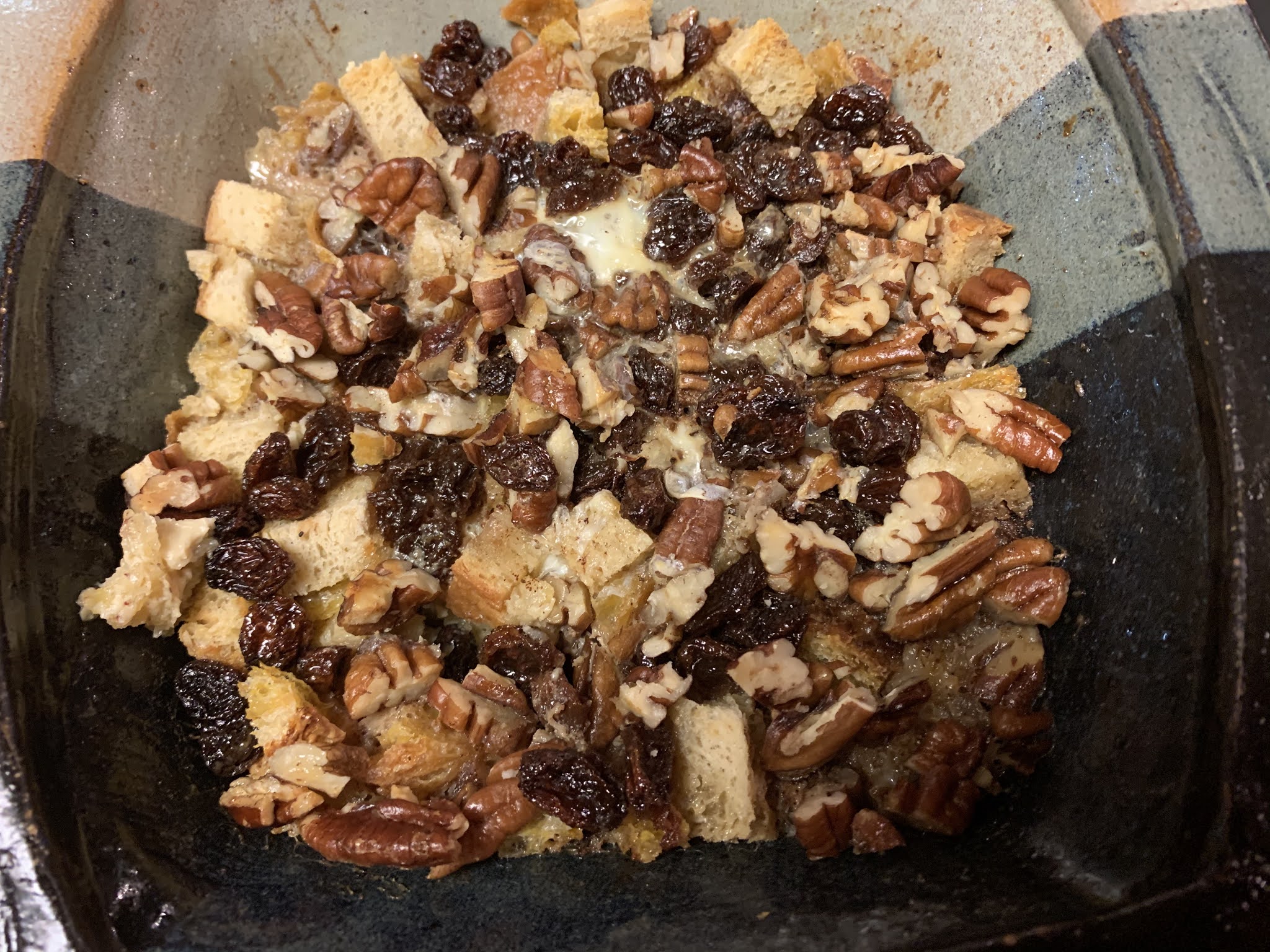
It’s a bread-based dessert, a great way to use up extra bread (I used a combination of Oatmeal Bread & a no-knead artisan bread. Paired with a main dish salad, it’s a great way to balance a light meal with a filling dessert. Full of dried fruit and nuts, it is not overly sweet; a comfort-food dessert! 

I cut it in half and it 

Dona Myers shared this easy-to-make old-fashioned recipe that utilizes everyday ingredients. It is presented in the style she shared.


Dona’s Old Fashioned Bread Pudding   6 to 8 servings
Heat to scalding....................2 cups milk
Pour over..............................4 cups coarse bread, cubed 
Cool and add.........................1/4 cup melted butter (I just added butter directly to milk)
                                              1/2 cup sugar (granulated or brown)
                                              2 eggs, slightly beaten
                                              1/4 tsp. salt
                                              1/2 cup raisins

                                              1/2 cup chopped pecans, optional 
                                              1 tsp. ground cinnamon or nutmeg

                                              1 tsp. vanilla (this was also my addition)


1.   Pour all ingredients into buttered 1/1/2 qt, casserole (7 1/2").  

2.   Bake in a preheated 350° oven until a knife inserted in pudding comes out clean.  

3.   Serve warm with or without cream or ice cream or hard sauce. We served it with honeyed  yogurt.

Butter and spices added to scalded milk as it is allowed to cool. 


Egg mixed into cool milk, butter and spice mixture.

Custard poured over bread, raisins and pecans.

KA Back-of-the-Bag Oatmeal Bread

With oats on both the inside and out, I thought this would be a great way to add oatmeal to my morning menu . . . an alternative to my daily Steel-Cut Oats and another attempt to help lower my bad cholesterol levels. 

King Arthur makes great flour and their recipes always look so enticing + their step-by-step instructions are thorough and complete. However, even though I use their recommended products and even weigh ingredients, I find the resulting doughs to be less pliable than my other favorite recipes. 

I have baked bread for 50+ years and taught high school and adult baking/bread classes. I am most familiar with recipes that suggest approximately flour measurements (ie. 2 to 3 cups)—starting with the least amount and adding more only if needed. While some flours have a variable protein content that does effect the amount of flour used, KA flour’s protein content is consistent and this is why, I believe, that their recipes state exact measurements. However, every time I use that exact measure, I am sorry. Consequently, I adapted this recipe to 2 to 3 cups (240.66 to 361 gram). I added the 2 cup equivalent and then  only enough extra to make the dough pliable (less than an additional 1/2 cup). 

Find the original KA recipe on their website — Back-of-the-Bag Oatmeal Bread 


KA Back-of-the-Bag Oatmeal Bread     Yield: One 9" x 5" loaf

Dough

32 to 3 cups (240.66 to 361 grams) King Arthur Unbleached Bread Flour – original recipe calls for 3 cups (361 g)

1 cup (89g) old-fashioned rolled oats

2 tablespoons (28g) butter

1 1/2 teaspoons (9g) salt

3 tablespoons (40g) brown sugar or 3 tablespoons (63g) honey

2 teaspoons instant yeast  

1 1/4 cups (283g) lukewarm milk

Topping

1 large egg white

1 tablespoon (14g) cold water

1 to 2 tablespoons (6g to 12g) old-fashioned rolled oats

  1. Weigh your flour; or measure it by gently spooning it into a cup, then sweeping off any excess.
  2. To make the dough: In a large mixing bowl, or in the bowl of a stand mixer, Add 2 cups (240.66 g) flour and remaining dough ingredients; mix together all of the ingredients to form a rough, shaggy dough.
  3. Knead the dough, by hand or mixer, until it's springy though still somewhat soft, about 5 to 7 minutes, adding more flour only if needed. Note: The dough may feel quite sticky at the beginning but be careful about adding too much more flour as additional flour will make the loaf dry (I added less than 1/2 cup more). If you're kneading by hand, try kneading on a lightly greased work surface rather than a floured surface. 
  4. Place the dough in a lightly greased bowl, cover, and allow it to rise at room temperature for 1 hour; it'll become quite puffy, though it may not double in bulk. If your kitchen is particularly cold (below 65°F), place the bowl of dough in your turned-off oven with the oven light on.
  5. To shape the dough: Transfer the dough to a lightly oiled surface. Flatten the dough into a 6” x 8” rectangle. Fold the top down to the center (like you were folding a letter), pressing it firmly with the heel of your hand to seal. Pull the upper left and right corners into the center, pressing to seal. Repeat the first step (folding the top to the center and sealing) three or four more times, until you’ve created a 9” to 10” log. Tuck the ends under slightly, and turn the log over so its seam is on the bottom. OR, use your favorite shaping method. 
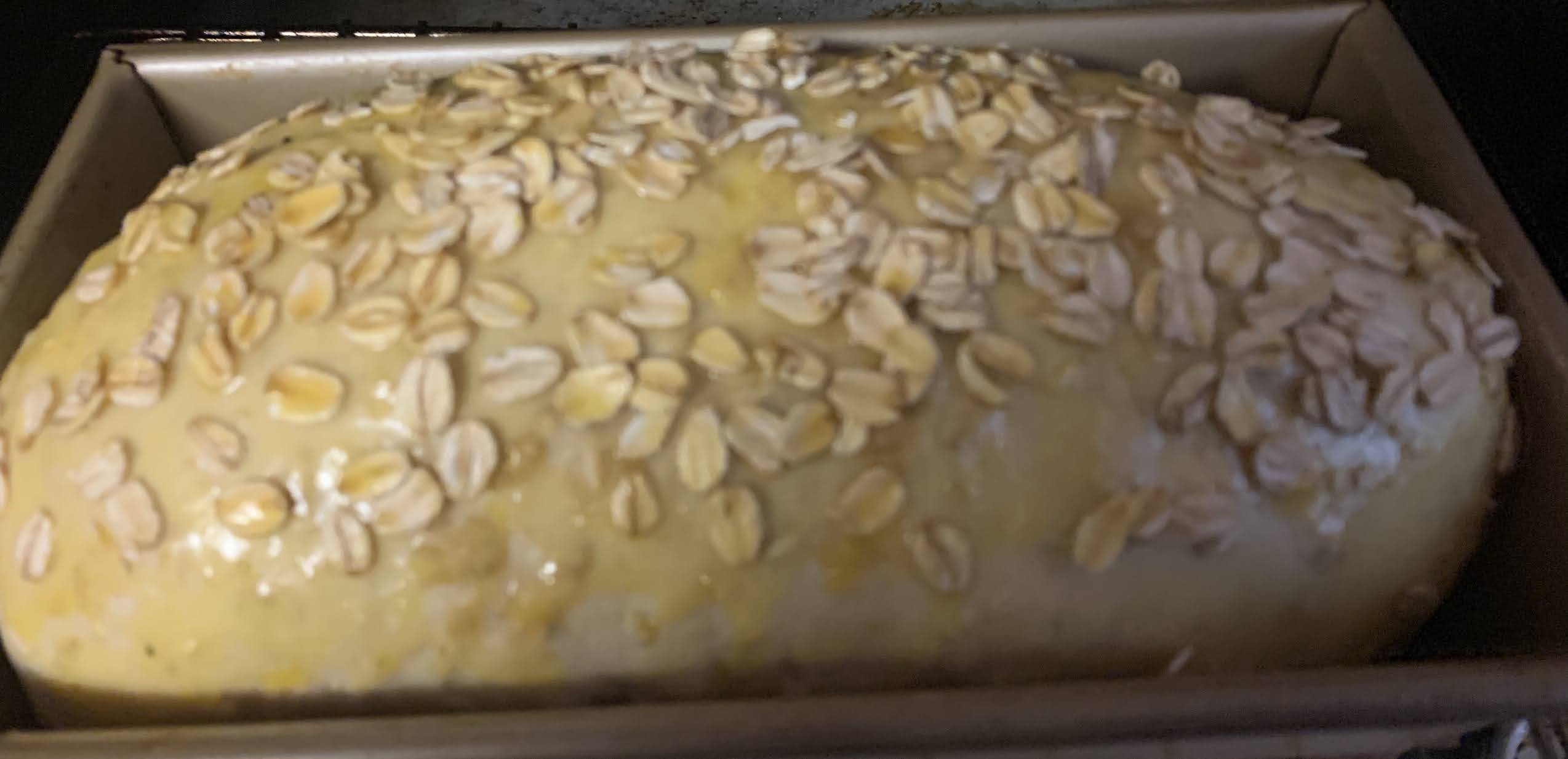
  6. Place the log in a lightly greased 9" x 5" loaf pan, and tent the pan with lightly greased plastic wrap or the cover of your choice. Allow the dough to rise for 1 to 1 1/2 hours, until it's crested about 1" over the rim of the pan.
    Ready to go into the oven.
  7. Towards the end of the rising time, preheat your oven to 350°F with a rack in the center.
  8. To add the topping: Uncover the risen loaf. Beat the egg white with the cold water. Brush the beaten white all over the top crust (you won't need it all), then sprinkle with the rolled oats.
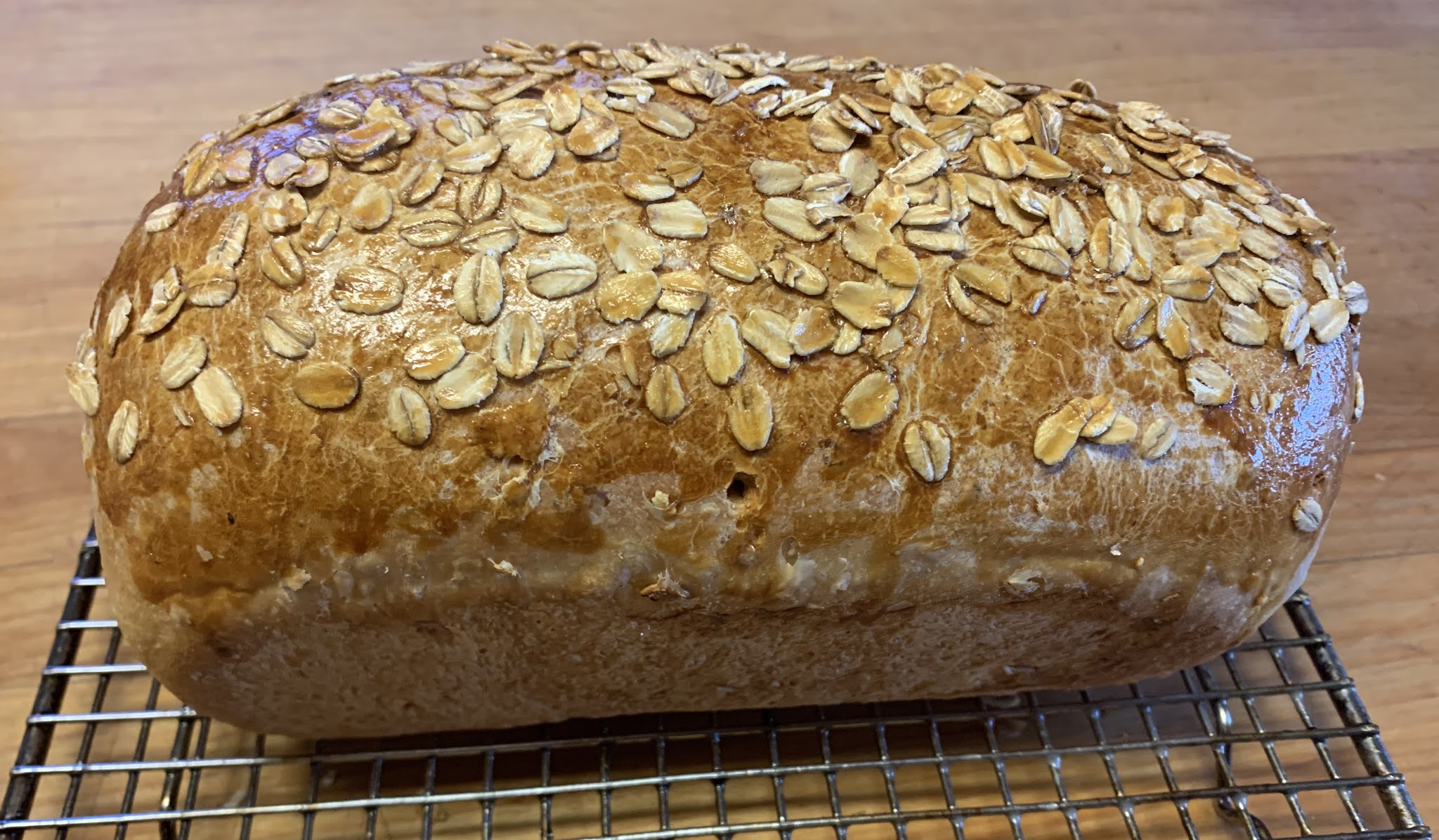
  9. To bake the bread: Bake the bread for 35 to 40 minutes, until it's golden brown. If the bread appears to be browning too quickly, cover it lightly with aluminum foil for the final 10 minutes of baking. When done, a digital thermometer inserted into the center of the loaf will register 190°F. If you don't have a thermometer, slide the bread out of its pan and tap its bottom with your fingers: you should hear a hollow thump.
  10. Remove the bread from the oven and turn it out of the pan onto a rack to cool. Cool completely before slicing. Store, well wrapped, at room temperature for several days; freeze for longer storage.
Recipe without photos . . .

KA Back-of-the-Bag Oatmeal Bread     Yield: One 9" x 5" loaf

Dough

32 to 3 cups (240.66 to 361 grams) King Arthur Unbleached Bread Flour – original recipe calls for 3 cups (361 g)

1 cup (89g) old-fashioned rolled oats

2 tablespoons (28g) butter

1 1/2 teaspoons (9g) salt

3 tablespoons (40g) brown sugar or 3 tablespoons (63g) honey

2 teaspoons instant yeast  

1 1/4 cups (283g) lukewarm milk

Topping

1 large egg white

1 tablespoon (14g) cold water

1 to 2 tablespoons (6g to 12g) old-fashioned rolled oats

  1. Weigh your flour; or measure it by gently spooning it into a cup, then sweeping off any excess.
  2. To make the dough: In a large mixing bowl, or in the bowl of a stand mixer, Add 2 cups (240.66 g) flour and remaining dough ingredients; mix together all of the ingredients to form a rough, shaggy dough.
  3. Knead the dough, by hand or mixer, until it's springy though still somewhat soft, about 5 to 7 minutes, adding more flour only if needed. Note: The dough may feel quite sticky at the beginning but be careful about adding too much more flour as additional flour will make the loaf dry (I added less than 1/2 cup more). If you're kneading by hand, try kneading on a lightly greased work surface rather than a floured surface. 
  4. Place the dough in a lightly greased bowl, cover, and allow it to rise at room temperature for 1 hour; it'll become quite puffy, though it may not double in bulk. If your kitchen is particularly cold (below 65°F), place the bowl of dough in your turned-off oven with the oven light on.
  5. To shape the dough: Transfer the dough to a lightly oiled surface. Flatten the dough into a 6” x 8” rectangle. Fold the top down to the center (like you were folding a letter), pressing it firmly with the heel of your hand to seal. Pull the upper left and right corners into the center, pressing to seal. Repeat the first step (folding the top to the center and sealing) three or four more times, until you’ve created a 9” to 10” log. Tuck the ends under slightly, and turn the log over so its seam is on the bottom. OR, use your favorite shaping method. 
  6. Place the log in a lightly greased 9" x 5" loaf pan, and tent the pan with lightly greased plastic wrap or the cover of your choice. Allow the dough to rise for 1 to 1 1/2 hours, until it's crested about 1" over the rim of the pan.
  7. Towards the end of the rising time, preheat your oven to 350°F with a rack in the center.
  8. To add the topping: Uncover the risen loaf. Beat the egg white with the cold water. Brush the beaten white all over the top crust (you won't need it all), then sprinkle with the rolled oats.
  9. To bake the bread: Bake the bread for 35 to 40 minutes, until it's golden brown. If the bread appears to be browning too quickly, cover it lightly with aluminum foil for the final 10 minutes of baking. When done, a digital thermometer inserted into the center of the loaf will register 190°F. If you don't have a thermometer, slide the bread out of its pan and tap its bottom with your fingers: you should hear a hollow thump.
  10. Remove the bread from the oven and turn it out of the pan onto a rack to cool. Cool completely before slicing. Store, well wrapped, at room temperature for several days; freeze for longer storage.

Roasted Cauliflower Florets


A great source of vitamin C, vitamin K, and B vitamins, a good source of fiber, and antioxidants, cauliflower makes a great side dish. The seasoning blend used in the recipe adds both color and flavor to the florets. 

Roasted Cauliflower Florets      4 side dish servings 

1 head cauliflower

1/4 cup olive oil 

1 1/2 teaspoons paprika  

1 teaspoon garlic powder  

1 teaspoon onion powder  

1/4 teaspoon chili powder  

1 teaspoon cumin  

1/4 teaspoon pepper

1 teaspoon salt

  1. Preheat the oven to 425°. 
  2. Rinse the cauliflower cut the florets off, placing them in a large bowl. 
  3. Drizzle the olive oil over the florets, and add the seasoning. Toss together. 
  4. Spread evenly over the prepared cookie sheet. Bake in preheated oven for about 30 minutes or until the edges are browned and crisp. Stir once or twice during the cooking time.
Recipe without photo . . .

Roasted Cauliflower Florets      4 side dish servings 

1 head cauliflower

1/4 cup olive oil 

1 1/2 teaspoons paprika  

1 teaspoon garlic powder  

1 teaspoon onion powder  

1/4 teaspoon chili powder  

1 teaspoon cumin  

1/4 teaspoon pepper

1 teaspoon salt

  1. Preheat the oven to 425°. 
  2. Rinse the cauliflower cut the florets off, placing them in a large bowl. 
  3. Drizzle the olive oil over the florets, and add the seasoning. Toss together.
  4. Spread evenly over the prepared cookie sheet. Bake in preheated oven for about 30 minutes or until the edges are browned and crisp. Stir once or twice during the cooking time.

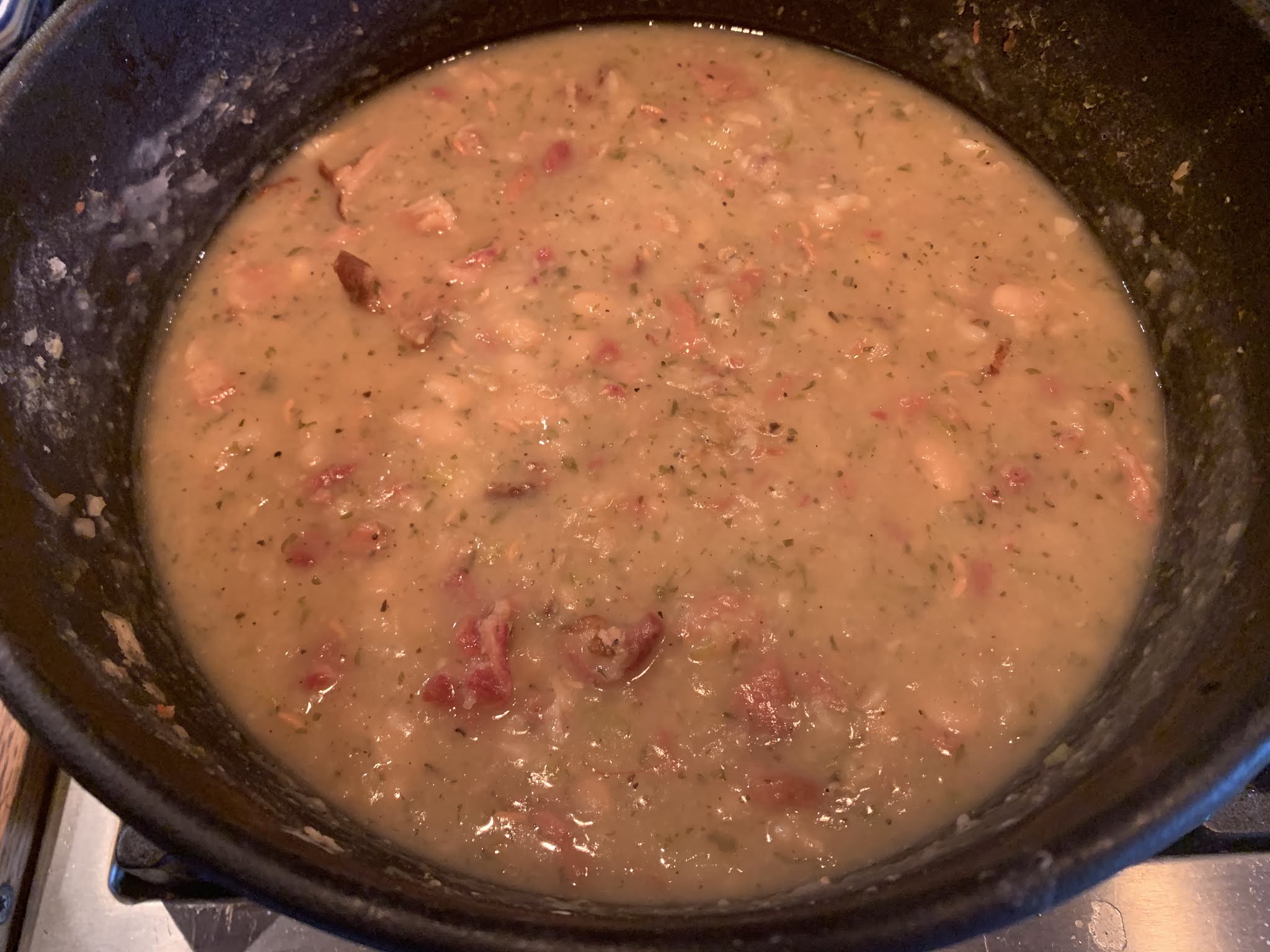
SENATE BEAN SOUP

Our Christmas ham bone became the basis for today’s bean soup. My mom often made bean soup using with Great Northern or Navy beans. One of our earliest stoves on the farm was fueled by gas and instead of a back burner on the left side, it had a built in soup pot which Mom used to make all kinds of soups. Mom’s version of bean soup did not contain potatoes however, in later years she was fond of serving bean soup over mashed potatoes. The potato addition helps thicken the soup and adds another flavor component.                                                      

   I made Copycat Jiffy Corn Muffins to go with the bean soup.
                               

SENATE BEAN SOUP   Makes about 2 1/2 to 3 quarts

1 pound or 2 cups dry Great Northern or Navy beans*

-----

1 1/2 pound ham hocks or 1 meaty ham bone

1 large or 2 smaller bay leaf

-----

1 cup finely chopped onion

2 garlic cloves, minced

1 cup finely chopped celery

3/4 cups mashed potatoes or 1/2 cup dried mashed potato potato flakes

1/4 cup chopped fresh parsley or 2 tablespoons dried parsley

1 1/2 teaspoon salt

1 teaspoon pepper

2 teaspoons Italian seasoning, optional

  1. Wash and sort beans. In a large kettle, cover beans with 6 cups hot hater. Bring to a boil; boil 2 minutes.
  2. Remove from heat, cover, and let stand 1 hour.
  3. Add another 1 1/2 to 2 quarts of cold water, ham bone and bay leaf. Bring to a boil; simmer 1 1/2 hours.
  4. Stir in remaining ingredients. Simmer 20 to 30 minutes or until beans are tender. Taste and adjust seasonings as needed. 
  5. Remove ham bone, trim off meat, return to soup.
Alternative: Slow cooker version: simmer all ingredients in the slow cooker for about 6 hours after completing step #1. 

Great Northern beans are oval-shaped with a thin skin and larger overall than Navy beansNavy beans are also oval-shaped, but they are much smaller and slightly plumper than great Northerns, with thicker skins. Great Northerns and Navy beans both possess subtle, mild flavors.


Recipe without photos . . .

SENATE BEAN SOUP   Makes about 2 1/2 to 3 quarts

1 pound or 2 cups dry Great Northern or Navy beans*

-----

1 1/2 pound ham hocks or 1 meaty ham bone

1 large or 2 smaller bay leaf

-----

1 cup finely chopped onion

2 garlic cloves, minced

1 cup finely chopped celery

3/4 cups mashed potatoes or 1/2 cup dried mashed potato potato flakes

1/4 cup chopped fresh parsley or 2 tablespoons dried parsley

1 1/2 teaspoon salt

1 teaspoon pepper

2 teaspoons Italian seasoning, optional

  1. Wash and sort beans. In a large kettle, cover beans with 6 cups hot hater. Bring to a boil; boil 2 minutes.
  2. Remove from heat, cover, and let stand 1 hour.
  3. Add another 1 1/2 to 2 quarts of cold water, ham bone and bay leaf. Bring to a boil; simmer 1 1/2 hours.
  4. Stir in remaining ingredients, Simmer 20 to 30 minutes or until beans are tender. Taste and adjust seasonings as needed. 
  5. Remove ham bone, trim off meat, return to soup.
Alternative: Slow cooker version: simmer all ingredients in the slow cooker for about 6 hours after completing step #1. 

Great Northern beans are oval-shaped with a thin skin and larger overall than Navy beansNavy beans are also oval-shaped, but they are much smaller and slightly plumper than great Northerns, with thicker skins. Great Northerns and Navy beans both possess subtle, mild flavors.

Copycat Jiffy Corn Muffin Mix

I am a fan of Jiffy Corn Muffin Mix but there is none in the cupboard. So, instead of making a trip to the stores during COVID season, I goggled copycat recipes and the one I include below seems to be the standard. It uses basic ingredients and is almost easy as it’s namesake. And, the homemade is light and fluffy – just like it’s namesake and is the perfect accompaniment to Senate Bean Soup. 

Copycat Jiffy Corn Muffin Mix    Makes 6 muffins / Equal to an 8.5 ounces box (1 ½ cups) of Jiffy Corn Muffin Mix


COPYCAT JIFFY CORN MUFFIN MIX


2⁄3 
cup all-purpose flour

1⁄ 2 
cup yellow cornmeal

1⁄3
 cup granulated sugar 

1 
tablespoon baking powder

1⁄2 
teaspoon salt

2 
tablespoons vegetable oil


TO MAKE MUFFINS, add


1 
egg

1⁄3 
cup milk 

Optional additions: 

    1⁄2 
cup grated Cheddar cheese 

    2 
ounces canned chilies 

    1⁄4 
cup drained chopped pimiento 

    1⁄2 
cup chopped onion

  1. Combine first 5 ingredients in a bowl, mix well.
  2. To make Mis: Whisk in vegetable oil and mix until dry mixture is smooth and lumps are gone. Note—If another recipe is calling for a box of Jiffy Corn Muffin Mix, add the above mixed ingredients to that recipe.
  3. To make Corn Muffins: Preheat oven to 400F, spray muffin pan with non-stick cooking spray.
  4. Combine mix with egg and milk, mixing well. Add any combination of optional ingredient if desired. 
  5. Fill each muffin cup about 1/2 to 3/4  full.
  6. Bake in preheated oven for 15 to 20 minutes, until a toothpick inserted in center comes out clean.
    Corn Muffins accompany Senate Bean Soup.
Recipe without photos . . . Copycat Jiffy Corn Muffin Mix    Makes 6 muffins / Equal to an 8.5 ounces box (1 ½ cups) of Jiffy Corn Muffin Mix


COPYCAT JIFFY CORN MUFFIN MIX


2⁄3 
cup all-purpose flour

1⁄ 2 
cup yellow cornmeal

1⁄3
 cup granulated sugar 

1 
tablespoon baking powder

1⁄2 
teaspoon salt

2 
tablespoons vegetable oil


TO MAKE MUFFINS, add


1 
egg

1⁄3 
cup milk 

Optional additions: 

    1⁄2 
cup grated Cheddar cheese 

    2 
ounces canned chilies 

    1⁄4 
cup drained chopped pimiento 

    1⁄2 
cup chopped onion

  1. Combine first 5 ingredients in a bowl, mix well.
  2. To make Mis: Whisk in vegetable oil and mix until dry mixture is smooth and lumps are gone. Note—If another recipe is calling for a box of Jiffy Corn Muffin Mix, add the above mixed ingredients to that recipe.
  3. To make Corn Muffins: Preheat oven to 400F, spray muffin pan with non-stick cooking spray.
  4. Combine mix with egg and milk, mixing well. Add any combination of optional ingredient if desired. 
  5. Fill each muffin cup about 1/2 to 3/4  full.
  6. Bake in preheated oven for 15 to 20 minutes, until a toothpick inserted in center comes out clean.

Sheet Pan Dinner: Baked Sausages and Potatoes for two

We bought German sausages at Hildebrand Dairy and decided to bake them sheet pan style. Accompanied with Kansas-made sauerkraut from Hoganville Family Farms, it was an ethnic inspired menu . . . and easy, too. Our meal was for two but it’s easy to adjust the amounts.


Sheet Pan Dinner: Baked Sausages and Potatoes for two 


2 potatoes, peeled & cubed

1 apple, sliced

Several sprigs fresh sage

Several sprigs fresh rosemary

About 2 tablespoons olive oil 

Kosher salt & coarse black pepper to taste

2 1/2 pork sausages 

  1. Preheat the oven to 400°.
  2. In a large bowl combine the potatoes, apple slices, sage and rosemary. Drizzle with olive oil over, season generously with salt and pepper. (Note: Next time I would wait and add the apples during the last 15 minutes.)
  3. Arrange the potatoes, apples and herbs in a large shallow roasting pan. Arrange the sausages in and around the vegetables.
  4. Bake for 30 minutes or until golden and cooked through—turn sausages, potatoes, etc. after 15 minutes.

Recipe without photos . . .

Sheet Pan Dinner: Baked Sausages and Potatoes for two 

2 potatoes, peeled & cubed

1 apple, sliced

Several sprigs fresh sage

Several sprigs fresh rosemary

About 2 tablespoons olive oil 

Kosher salt & coarse black pepper to taste

2 1/2 pork sausages 

  1. Preheat the oven to 400°.
  2. In a large bowl combine the potatoes, apple slices, sage and rosemary. Drizzle with olive oil over, season generously with salt and pepper. (Note: Next time I would wait and add the apples during the last 15 minutes.)
  3. Arrange the potatoes, apples and herbs in a large shallow roasting pan. Arrange the sausages in and around the vegetables.
  4. Bake for 30 minutes or until golden and cooked through—turn sausages, potatoes, etc. after 15 minutes.